Monday, May 12, 2025

 ðŸ§° Curating the Past and Present: Choosing Powerful Learning Materials for HASS

📚 Why Resource Selection Matters in HASS

In the Humanities and Social Sciences, the learning materials we choose are not neutral—they shape how students understand people, places, histories, and systems. Whether it’s a political cartoon, a primary source letter, a modern news article, or a hand-carved tool, each artefact brings a perspective that either deepens understanding or risks flattening complexity.

Unlike some subjects where a single textbook might do, HASS requires diverse, multimodal resources that reflect real-world inquiry and build critical, disciplinary knowledge. Materials must support students to question, interpret, analyse, and empathise—not just remember facts.

As Parker (2020) reminds us, HASS teaching must go beyond generic “worksheets” and draw students into authentic disciplinary practices through rich, relevant materials.


🗂️ What Counts as a 'HASS Learning Material'?

A HASS learning material isn’t just a handout—it’s any text, artefact, image, document, or tool that helps students engage with inquiry. Effective materials:

  • Support exploration of real-world or historical contexts
  • Represent multiple perspectives and voices
  • Invite analysis and interpretation
  • Reflect the language, tools, and texts of the discipline
  • Are age-appropriate, accurate, and inclusive

This includes both primary sources (e.g., letters, maps, artefacts, oral histories) and secondary sources (e.g., textbook explanations, documentaries, websites).


🕵️‍♀️ Using Artefacts and Sources: Making Learning Tangible

Artefacts—both physical and digital—allow students to interact with history, geography, civics, and economics in concrete, visual, and tactile ways. They act as springboards for inference, empathy, and critical thinking.

Examples of HASS artefacts and materials:

  • History: Replica tools, immigration documents, diary entries, photographs, timelines
  • Geography: Weather maps, topographic maps, satellite imagery, land use plans, items from the natural enviornment
  • Civics: Voting ballots, campaign posters, parliamentary transcripts, protest footage
  • Economics: Product packaging, pricing data, ads from different eras, budget infographics

🧠 Tip: Artefacts don’t need to be “old”—they just need to represent a context, viewpoint, or system that students can question and analyse.


🧠 How to Select Effective Materials

Use the following criteria to guide your selection:

1. Authenticity

Does the material come from the real world or simulate a genuine civic, historical, geographic, or economic context? Students should feel like they’re working with the same kinds of resources professionals would use.

2. Complexity

Does it require thinking beyond the surface? Look for materials that aren’t too simple or closed-ended—those that invite interpretation, questioning, or comparison.

3. Accessibility

Is it suitable for your learners in terms of readability, cultural familiarity, and scaffolding needs? Offer visuals, vocab supports, and guiding questions where necessary.

4. Inclusivity

Does the material reflect a diversity of voices? Especially in history and civics, consider whose stories are told—and whose are left out.

5. Alignment

Does it align with curriculum goals, inquiry questions, or disciplinary skills? Always ask: What thinking will this material prompt?


📦 Example: Year 5 History – The Gold Rush

Topic: The impact of the gold rush on different groups in Australia.

Materials to include:

  • A newspaper excerpt from 1851 describing gold fever
  • A mining licence document (primary source)
  • A political cartoon showing Chinese miners being harassed
  • An image of a recreated goldfields town
  • An audio diary reading from a migrant family
  • An interactive map showing migration routes

Students are asked to use these artefacts to form evidence-based conclusions about:

"How fair was life on the goldfields, and for whom?"


🛠️ Where to Find Quality HASS Materials

Here are some excellent sources for rich, classroom-ready HASS resources:

  • Trove (National Library of Australia) – digitised newspapers, photos, letters
  • ABC Education – civics, history, and geography videos
  • National Museum of Australia – artefact images, virtual exhibits, First Nations perspectives
  • My Place for Teachers – timelines, character stories, teacher notes
  • Australian Electoral Commission – mock voting kits and civics resources
  • Geoscience Australia – downloadable maps and spatial tools
  • State libraries/museums – often have education packs and curated collections
  • Your own life/backyard - often we have our own rich artifacts students can explore or bring their own in

🧠 Pro Tip: Build your own classroom resource bank using Google Drive folders or Padlets so students can access materials easily.


✏️ Student Use: From Passive to Active

The goal isn’t just to show materials—it’s to have students use them to think. Try framing resource use around verbs like:

  • Compare
  • Infer
  • Evaluate
  • Sequence
  • Classify
  • Judge
  • Justify

For example:

  • “Compare two images of land use and infer how this environment has changed.”
  • “Evaluate the reliability of these two newspaper reports on a protest.”

These verbs align with both Bloom’s Taxonomy and the skills strand in the HASS curriculum.


🎓 Final Thoughts: Materials That Make Meaning

Powerful HASS learning happens when students explore rich, real-world materials that challenge them to think deeply. Whether it’s through a torn photo, a census sheet, or a town plan, the resources we choose shape the inquiries our students undertake and the connections they make.

Design your units like a museum exhibition—thoughtfully curated, purposefully layered, and full of stories waiting to be uncovered.


Thursday, May 8, 2025

🧩 The Art of Personalised HASS: Making the Curriculum Meaningful for Every Student

🧩 The Art of Personalised HASS: Making the Curriculum Meaningful for Every Student

🎓 Theoretical Foundations: Differentiation, Student Voice, and Identity

Personalising learning in HASS is grounded in principles of differentiated instruction, Universal Design for Learning, and culturally responsive pedagogy. These frameworks share a common goal: to ensure every student can access, engage with, and find meaning in what they’re learning.

In HASS, where we examine histories, places, cultures, systems, and identities, personalisation isn’t just an option—it’s a pedagogical imperative. When students see their stories, communities, questions, and challenges reflected in the curriculum, they are more likely to invest, participate, and retain what they learn.

Personalisation in HASS involves:

              • Adjusting content, process, product, and environment

              • Incorporating student choice and voice

              • Embedding cultural and contextual relevance

              • Valuing diverse worldviews and lived experiences


🎯 Why Personalised Learning Matters in HASS

Unlike subjects that are more skills-based or procedural, HASS is interpretive, narrative-driven, and context-sensitive. It invites students to explore:

              • Who they are and where they come from

              • How people live and interact in different settings

              • What justice, power, identity, and environment mean to them

By personalising HASS, we:

              • Support students with varied learning preferences and literacy levels

              • Engage learners through relevant, authentic inquiry

              • Foster inclusivity, agency, and motivation

              • Build critical and creative thinking in relation to their world


🛠️ Strategies for Personalising HASS in Practice

1. Interest-Based Inquiry Questions

Give students choice in what they explore, while guiding them with key concepts.

Examples:

              • In Civics: “What does fairness mean to me?” or “How does leadership work in my culture?”

              • In Geography: “How does my neighbourhood manage natural resources?”

              • In History: “Whose stories haven’t been told in our local community?”

Use student-driven questions to co-construct inquiry pathways while still aligning with curriculum content descriptors.

2. Differentiated Learning Pathways

Modify learning tasks based on readiness, need, or learning profile.

Ideas:

              • Use tiered activities with visual, oral, written, and hands-on options

              • Offer different end products: video presentations, maps, dioramas, journals

              • Scaffold research tasks for students needing extra support

              • Incorporate extension tasks for deeper analysis

This allows all students to access core HASS concepts at their own level, with room to grow.

3. Relatable, Localised Case Studies

Swap generic textbook examples for local or culturally relevant stories.

For example:

              • Replace a general history topic with a community migration story

              • Use maps of the students’ own suburb or country of heritage

              • Invite students to interview their families about cultural celebrations

              • Integrate community or First Nations perspectives that reflect the class makeup

Place-based, student-centred learning fosters meaning-making and belonging.

4. Student-Led Presentations and Products

Allow students to demonstrate understanding in ways that reflect their strengths and interests.

Ideas:

              • Podcasts, zines, or documentaries on community change

              • Personal timelines or illustrated life journeys

              • Maps of important places in their identity or ancestry

              • Peer teaching sessions on cultural knowledge

These multimodal and choice-driven outputs enhance motivation and creativity.


🧠 In Action: A Year 6 HASS Unit on Migration

Personalisation Focus:

              • Students begin with the broad question: “Why do people move?”

              • They then choose a migration story to explore: family, local community member, or a fictional case.

              • Tasks are differentiated based on readiness:

                             ○ Some students create a digital story

                             ○ Others produce a research poster or infographic

                             ○ One group works with a scribe or buddy to create an oral narrative

Outcomes:

              • Students learn the economic, political and cultural drivers of migration

              • They connect emotionally and intellectually with the topic

              • All students access the content in a meaningful, personal way


💬 Final Thoughts: The Personal is Pedagogical

Personalising HASS is about more than just engagement—it’s about justice, identity, and inclusion. When students see that their voices, communities, histories, and questions matter, they don’t just learn HASS—they live it.

As educators, our role is to design flexible, responsive learning pathways that honour diversity, cultivate agency, and ensure every student sees a place for themselves in the narrative of society.      


Sunday, November 17, 2024

ABC sites


HAA resources now available


HAA now has two products available after our successful professional learning program was completed for 2024 yesterday, Saturday 16 November. Here is some information on the HAA products that are now available for individuals and schools to purchase at https://hassaa.org.au/haa-products/ 

The Creative Teaching in HaSS Resource is a comprehensive A-Z listing of lesson starters and teaching activities to support creative teaching in schools. The resource includes a 35 page digital resource containing background on creative teaching, over 250 teaching activities (with links to online resources) and a professional learning presentation on creative teaching in the HaSS classroom. 

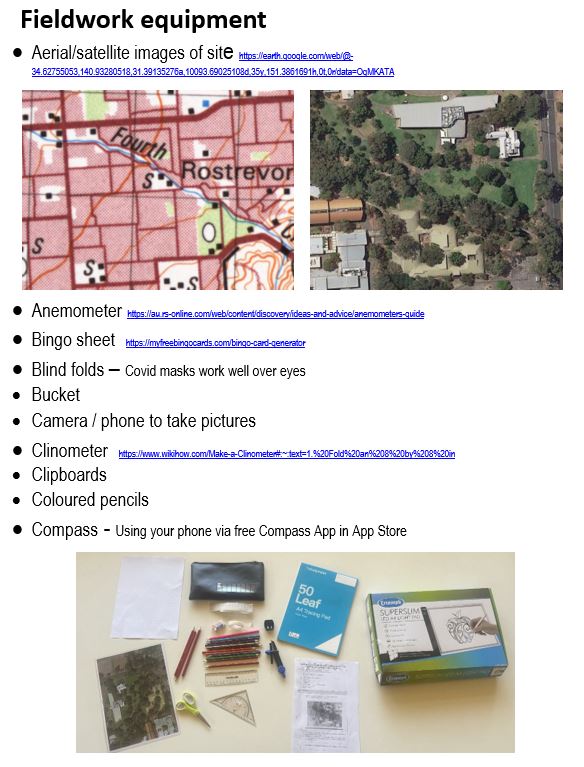
A resource written to support the teaching of mapping and fieldwork in the HaSS classroom. Classroom ready for the HaSS teacher! Lots of mapping and fieldwork ideas and links to resources.  The resource includes a 36 page handbook and a professional learning presentation to support HaSS teachers develop an achievable  mapping and fieldwork program for their HaSS class.

The cost of the each of the resources:

HAA Members price for individual copy for personal use only: $20

HAA Members price for an unlimited site licence for the resource in a school: $50. This offer is only available for HAA Corporate members. Details on Corporate membership at https://hassaa.org.au/membership-categories/

Non HAA Members price for individual copy for personal use only: $40

Non HAA Members price for an unlimited site licence for the resource in a school: $100

Join HAA at https://hassaa.org.au/haa-membership-form/ to be eligible for the membership price for the resource.

If you wish to purchase the resource, go to https://hassaa.org.au/haa-products/ for the details and order forms.

Wednesday, October 9, 2024

A new book on powerful knowledge


What are we teaching?, by Richard Bustin, available from Amazon 

Following the work of Professor David Lambert and Professor Michael Young in the UK, HaSS educators have incorporated the idea of powerful knowledge into their thinking about what is taught in HaSS. There is a new book called What are we teaching? becoming available early in 2025, that articulates this thinking regarding powerful knowledge in a great way. Pre-order now and you will get free postage from the UK. This blog is not about promoting books but this book is one that will help you clarify the significance of HaSS learning and the powerful knowledge that we see as so important for all students to acquire in HaSS.  Here is the write-up on the book:

Richard Bustin in What Are We Teaching? discusses the importance of having a subject-based curriculum in schools and explores the responsibility that teachers, through their subject specialisms, have to help ensure this is achieved. What are we Teaching? moves ideas beyond the traditional vs progressive debates that have dominated education discourse. Teachers are burdened by the overarching emphasis on exam performance at the expense of the broader benefits of teaching their subject, expressed here as capabilities. This book suggests that subjects are key to enabling young people to develop the powerful knowledge needed to flourish in a complex modern world. Part one introduces the key theories on which the book is based, including different ways of making sense of knowledge, skills and values in the curriculum, powerful knowledge and educational capabilities. What are we Teaching? is research-based, using voices of real teachers who engaged with the question ‘what makes your subject a powerful knowledge for young people’, and it is their testimonies that provide a provocation for each chapter in section two which focus on different subject areas. The final part offers advice on building a powerful knowledge, capabilities curriculum in schools. Essential reading for teachers, senior and subject leaders and curriculum coordinators.

Monday, September 16, 2024

Just a random interesting map re: dreams around the world ... or does it tell us more


 Mapping dream searches

The map above shows the most frequently searched dreams by country, categorized into themes like The Human Body, Animals & Nature, Love & Relationships, Money & Objects, Family, and Death. What does it tell us about what is happening in different countries. Yes, geography via random maps. To create this map, Google search data for every country was entered in a spatial data base.

For example, snakes are the most common dream in many countries worldwide. Teeth falling out is a significant dream theme in North America and parts of Europe.  Dreams related to Marriage and Pregnancy are also prevalent in various regions.

Each country is color-coded based on the theme of its most common dream.

For more information about this map go to https://brilliantmaps.com/the-most-common-dreams-by-country/ and watch the video.


Wednesday, September 11, 2024

Civics and Citizenship funding and program launched in South Australia

News report at https://www.youtube.com/watch?v=1NPcz0h2ScA

On 19 August, the Premier announced the following via a media release.

Safeguarding our democracy through education

Boosting the education of young people about the important role civics and citizenship play in our society will be the focus of sweeping nation-leading curriculum reforms outlined by the Malinauskas Labor Government today.

 Civics will be overhauled in public schools with an $18.4m investment, ensuring every student graduates with the knowledge and skills needed in an increasingly polarized world.

The changes include:

·         All years 7 and 8 public school students will study civics and citizenship for an hour per week.

·         Every subject in years 9 and 10 will have civics and citizenship incorporated into it as part of the introduction of a Cross-Curriculum Priority.

·         Public schools will be supported to introduce new opportunities for students to participate in school-based democratic opportunities, such as SRCs.

·         All public school students will be able to participate in an annual Active Citizenship Convention, starting next year, putting their education into practice.

These reforms – designed to strengthen the future of democracy in South Australia – will see the state lead the nation in this area. We will also be the first state or territory to introduce a specialised civics teacher in every public high school and B-12 school.

Increasing an educational focus on the civics and citizenship was championed by the South Australian Governor Frances Adamson AC, along with the Premier, and the advocacy of the Commissioner for Children and Young People Helen Connolly, who has argued for more civics and citizenship education in South Australia.

Civics is currently delivered through Humanities and Social Sciences as a compulsory aspect of learning between the years of 3 and 8. However, the quality of this delivery is mixed due to a lack of specialist teachers.

There has been a 15 per cent decline in students studying year 12 Politics, Power and People between 2021 and 2023 – highlighting the need for urgent reform.

The introduction of a Cross-Curriculum Priority, which currently exists in the Australian Curriculum for Sustainability, Asia and Australia’s Engagement with Asia, and Aboriginal and Torres Strait Islander Histories and Cultures, will mean that teachers in all subject areas in years 9 and 10 will need to embed civics into existing content. This will support students to apply the knowledge they learn in years 7 and 8 to real topics and scenarios across areas including science, maths, arts and English.

The Department will also work with schools to increase the offering of politics in SACE so more students have the opportunity to study it in their senior school years.

Additionally, a three-day statewide Active Citizenship Convention will be hosted annually, starting in 2025, for students to engage in workshops about issues of importance to them; and to learn about the ways in which relevant laws and policies are made and how they are influenced.

A working group, chaired by Department for Education Chief Executive Professor Martin Westwell, will oversee the implementation of these reforms.

Related article

·         https://www.weare.sa.gov.au/news/democracy-manifest-civics-to-receive-overhaul-in-sa-schools#:~:text=All%20year%207%20and%208%20public%20school%20students,for%20students%20to%20participate%20in%20school-based%20democratic%20opportunities.